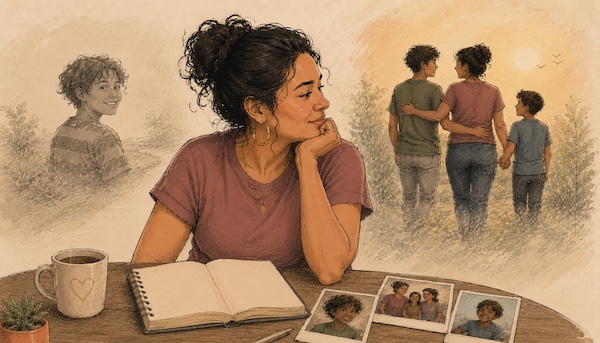
Why You Still Get Your Child’s Pronouns Wrong Sometimes
It has nothing to do with how much you love them.
You're in the car with your kid, talking about their day, and you get it right. Their name. Their pronouns. It flows, or close enough. And then that evening you're on the phone with your mother, talking about the same child, and the old pronoun comes out of your mouth before you even knew it was coming.
You hear it. You correct it. But something tightens in your chest anyway.
If I really got this, would I keep slipping?
The short answer is yes — and here's why that question is pointing you in the wrong direction.
The Guilt That Doesn't Fit
For a lot of parents, the slips feel like evidence of something. Like getting it right in front of your child but wrong in other conversations might mean you're holding on to an older version of them somewhere – especially in the spaces were they’re not there to correct the story. As if part of you hasn't fully come on board.
That guilt makes a certain kind of emotional sense. But it's based on a misread of what's actually happening.
The slip has very little to do with your commitment. It has almost everything to do with which neural pathway your brain reached for in that moment — and that depends on a lot more than love.
Why Direct and Third-Person Feel So Different
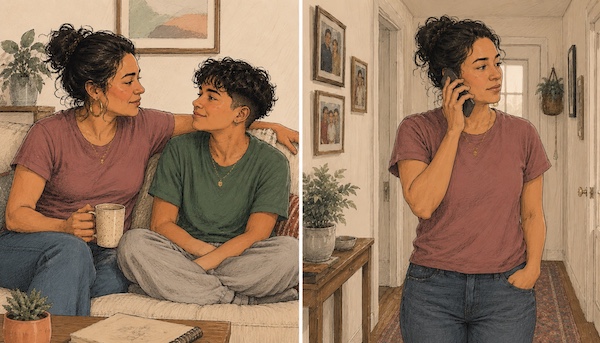
Here's something worth knowing: most parents find it noticeably easier to use the right name and pronouns when they're speaking with their child than when they're speaking about them to someone else.
If that's been your experience, you're not imagining it. There's a reason.
When you're in conversation with your child, you have them right there — their face, their presence, their responses. Your brain anchors to what it can see. The new name belongs to this person, in this moment, and the moment makes it real. The right pathway activates.
When you're talking about your child with someone else, you're working from memory without those anchors. You're also stepping into an older version of the relationship — a conversation with a grandparent, a sibling, a friend who has known your child by a different name for years. Your brain reaches for the version of your child that has lived longest in that relationship. That's a deeper groove. An older road. And under cognitive load — when you're also managing the other person's reactions, choosing your words carefully, anticipating what comes next — you have less bandwidth to actively override it.
Add to this: some of those third-person conversations happen in places where the old name was the only name anyone knew. The context itself pulls toward the past.
None of this is a reflection of your love. It's a reflection of which pathways have had more repetitions.
The Dog With the Wrong Name
There's a simpler version of this that many people may have experienced.
You get a new dog. You've had dogs before — one for years, one you loved, one whose name you said ten thousand times. And then one day, out of nowhere, you call the new dog by the old dog’s name.
It doesn't mean you've forgotten the new one. It doesn't mean you're grieving the old one more than you realized. It means your brain momentarily grabbed the most-worn groove.
The same thing happens with names and pronouns. The old name has history. It has repetitions. It has a whole context of relationships and moments behind it. The new name is real and true and yours to use — and it's also newer. That's all.
What Actually Builds the New Pathway
The brain builds new pathways through repetition and through association. Immersion accelerates it. This is why direct conversation with your child tends to feel easier — you're in the most immersive possible context. Every exchange reinforces the connection between this person and this name.
The third-person conversations catch up more slowly. But they do catch up.
When you slip, correct it and keep going. No spiral, no lengthy apology, no making it a moment. The correction itself is a repetition. It counts more than you think.
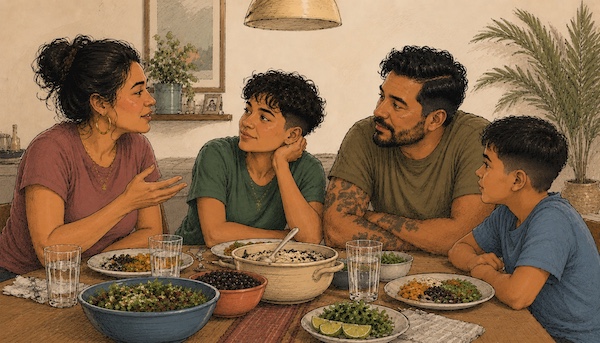
If you have a partner or other children at home, same thing — correct each other gently and move on. "Actually, they." And then the next sentence. This is what it looks like in any family where more than one language is spoken — someone says a word wrong, someone else says it right, and the conversation continues. No one stops to analyze what the mistake revealed. The correction is just part of how the language gets learned.
Less Guilt, More Accuracy
The guilt many parents carry about this is real. But it's aimed at the wrong thing.
If you were making mistakes because you didn't care, you wouldn't be noticing them. You wouldn't be correcting instantly. You wouldn't be reading this.
The mistakes are happening because you're in the middle of something that takes time. Your brain is building new roads while still having access to old ones. The old ones don't disappear on command — they fade through disuse. That just takes time, regardless of how clear your heart already is.
This kind of effort — the constant self-monitoring, the watching yourself in conversations you used to move through without thinking — adds up. It's part of a larger weight many parents carry without naming it.
There's a whole piece on what that exhaustion actually is:
→ Why Parenting Feels Harder Than It Used To
What matters is the direction you're moving. Are you catching yourself more? Correcting faster? Finding that certain conversations flow more easily than they used to? That's the road being built.
The slip is just a slip. What you do next is what slowly changes the road.
The Peaceful Warrior Calm Audio is seven minutes of putting that weight down.
No homework. Just a breath.
Visual Transparency: All images in this article were generated via DALL-E to illustrate the concepts discussed.